
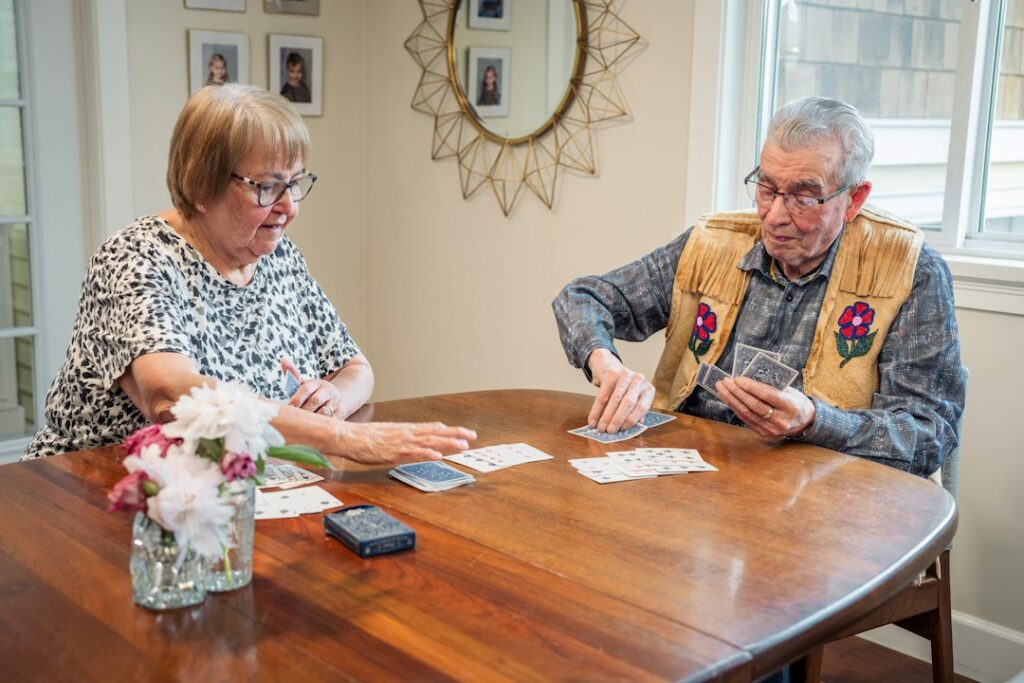
What games and pastimes are popular in assisted living?
Residents often enjoy activities that are social, familiar, adaptable, and easy to join without extensive preparation. Popular choices include card games, board games, puzzles, music, crafts, reading groups, gentle movement, gardening, and conversation-based activities.
The most successful pastimes are not necessarily the newest or most competitive. They are activities that allow people with different abilities, interests, and energy levels to participate comfortably. A familiar game can provide structure to the day, encourage conversation, and help residents feel connected to others.
Which card games work well for different ability levels?
Card games are flexible because the rules, pace, and number of players can be adjusted. Favorites may include:
- Bridge, pinochle, or canasta for experienced players who enjoy strategy
- Rummy or gin rummy for small groups
- Uno-style matching games for simple color and number recognition
- Go Fish or Old Maid for relaxed, easy-to-follow play
- Solitaire for quiet individual activity
- Large-print playing cards for residents with reduced vision or hand dexterity
A game should not feel like a test. Players may benefit from a brief review of the rules, cards with larger print, brighter lighting, or a slower pace. Some residents prefer watching a game and joining the conversation before becoming active participants.
Are board games still enjoyable for older adults?
Yes. Board games can support memory, planning, humor, and friendly interaction, especially when competition remains lighthearted. Checkers, dominoes, Scrabble-style word games, bingo, and simple dice games are often easy to recognize and explain.
Games with too many pieces or complicated instructions can become frustrating. A smaller board, fewer players, or a shortened version may work better. It can also help to keep score optional. For many residents, the conversation around the table matters as much as winning.
Large game pieces are useful for people with arthritis, tremors, limited vision, or reduced finger strength. Non-slip mats can keep boards and pieces from sliding across the table.
What activities are suitable for residents with memory loss?
People living with memory loss may enjoy activities based on recognition, rhythm, sensory experience, and personal history. Familiar games are often more comfortable than activities requiring residents to learn several new rules.
Helpful choices may include:
- Matching pictures, colors, or familiar objects
- Sorting cards, buttons, or large craft materials
- Listening to well-known songs and discussing memories
- Completing simple jigsaw puzzles with larger pieces
- Looking through themed picture books
- Folding towels or arranging safe household items
- Finishing common sayings or singing familiar songs
The goal is participation, not perfect performance. Instructions should be offered one step at a time, with encouragement rather than correction. If a resident loses interest, the activity can be changed without treating that as failure.
How can music become a daily pastime?
Music can be enjoyed individually or in a group. Residents may listen to favorite songs, sing along, play rhythm instruments, attend informal concerts, or discuss music connected to different life periods.
A music activity does not require musical training. Tapping, humming, choosing a song, or recalling where a song was heard can all be meaningful forms of participation. Some residents may prefer quiet listening, while others enjoy group singing.
Volume should be comfortable, particularly for people who use hearing aids. Shorter sessions may be easier than extended programs, and residents should be able to step away if the sound becomes tiring.
What creative hobbies are practical in assisted living?

Creative activities can include watercolor painting, colored pencils, seasonal decorations, knitting, crocheting, simple woodworking projects, collage, flower arranging, and guided writing. These hobbies offer a way to express personal preferences even when speech or mobility is limited.
Projects should be adaptable. For example, a resident who cannot manage small beads might enjoy selecting colors, arranging larger pieces, or directing another person. Someone who finds painting difficult may still enjoy choosing a subject or talking about the finished work.
Supplies should be easy to handle and safe for the setting. Nontoxic materials, rounded tools, large handles, and organized work areas can reduce frustration. Sharp tools, hot materials, strong adhesives, and small objects may require additional supervision.
Can outdoor activities be comfortable in Macungie?
Outdoor pastimes can be pleasant during mild spring and summer days, early autumn, and other periods when temperatures are comfortable. Residents may enjoy sitting in a garden area, watching birds, tending container plants, walking short distances, or visiting an outdoor seating area.
Seasonal conditions matter. Hot, humid weather can increase fatigue and dehydration risk, while cold temperatures, snow, ice, and wet walkways can make outdoor activities unsafe. Shade, drinking water, appropriate clothing, stable seating, and clear walking surfaces are practical considerations.
Container gardening is often easier than ground-level gardening because pots can be placed at a comfortable height. Residents may participate by watering, choosing plants, removing dead leaves, or simply enjoying familiar scents and colors.
Which pastimes help residents stay active without strenuous exercise?
Gentle movement can be included in ordinary recreational activities. Chair exercises, stretching, balloon volleyball, walking conversations, seated dancing, and simple movement games may support balance, flexibility, and circulation.
Activities should match each resident’s abilities and medical guidance. Participation can be brief, and movements may be completed while seated. A person who cannot join a full exercise session might still enjoy moving to music, passing a soft ball, or taking a short supervised walk.
The purpose is comfortable movement and social involvement, not athletic performance. Pain, dizziness, unusual shortness of breath, or sudden fatigue are reasons to stop and seek appropriate assistance.
How can families choose a pastime for a resident?
Start with the person’s history rather than age alone. Ask about games played in childhood, music enjoyed at home, hobbies connected to work, favorite holidays, sports interests, reading habits, and activities shared with family members.
It also helps to notice how the resident responds. Someone who avoids group games may enjoy one-to-one puzzles or music. A resident who tires easily may prefer short visits, quiet conversation, or an activity with no expectation to finish.
Good questions include:
- Does the resident prefer competition or cooperation?
- Are large print, large pieces, or special seating needed?
- Is the activity comfortable for the resident’s vision, hearing, hands, and memory?
- Can the activity be stopped easily if the resident becomes tired?
- Does it encourage conversation without requiring personal information?
Pastimes are most meaningful when they respect individual choice. A resident may enjoy the same activity one day and prefer something different the next. Flexibility allows games and hobbies to remain sources of comfort, connection, and enjoyment rather than obligations.
